

Hot Press News
- Tea Industry Associations Welcome the Recommendation made by Tea Board of India Committee on Minimum Sustainable Price for Indian Tea Industry
- GMR PEPTIDES Expands Access to Research Peptides with Third-Party Testing, High Purity Standards, and Same-Day Shipping
- Dr Bharat Agravat Releases Definitive 2026-2027 Root Canal Guide: Painless, Single-Visit RCT Powered by AI Guided EndoDeck System Across India
- DANZ MCI Highlights Integrated Business Support for Growing Companies
- Eurogrip’s Diwali film visits Chilla, tracing why the festival comes a day late Exploring the intrigue
- AMP Appliance Repair Highlights Same-Day Appliance Repair Services for Surrey Homeowners
- Vanshika Sharma Earns Punjab 1st Runner-Up and Beauty With Brain Titles at Dream Aura India 2026
- AAERA Expands Into New Study-Abroad Markets, Builds University Partnerships Across Emerging Destinations
- Cura Launches Health+ Range of Herbal Juices, Led by Cura Gut Health+ and Cura Liv Health+
- ARM MLM Software Advances Binary MLM Software Solutions for Modern Network Marketing Businesses
- LimeLight Stages Brings Versatile Modular Staging Solutions to Schools, Churches and Event Venues
- Allotab Healthcare LLP Shares Pharmaceutical Manufacturing and Export Solutions from India
- SBI Foundation and SBI Life jointly announced 'Skilling for Future' initiative To equip Underserved Youth with Technology Skills and Employment Opportunities
- Flying Goose Aviation Academy Expands Career-Focused Airport Management Education in Kochi and Kerala
- mjunction enables transparent eAuctions of onions and sugar for government agencies
 Mail to a Friend |
|
 Rate |
 |
Tea Industry Associations Welcome the Recommendation made by Tea Board of India Committee on Minimum Sustainable Price for Indian Tea Industry
2026-11-10 05:31:25
Industry
103
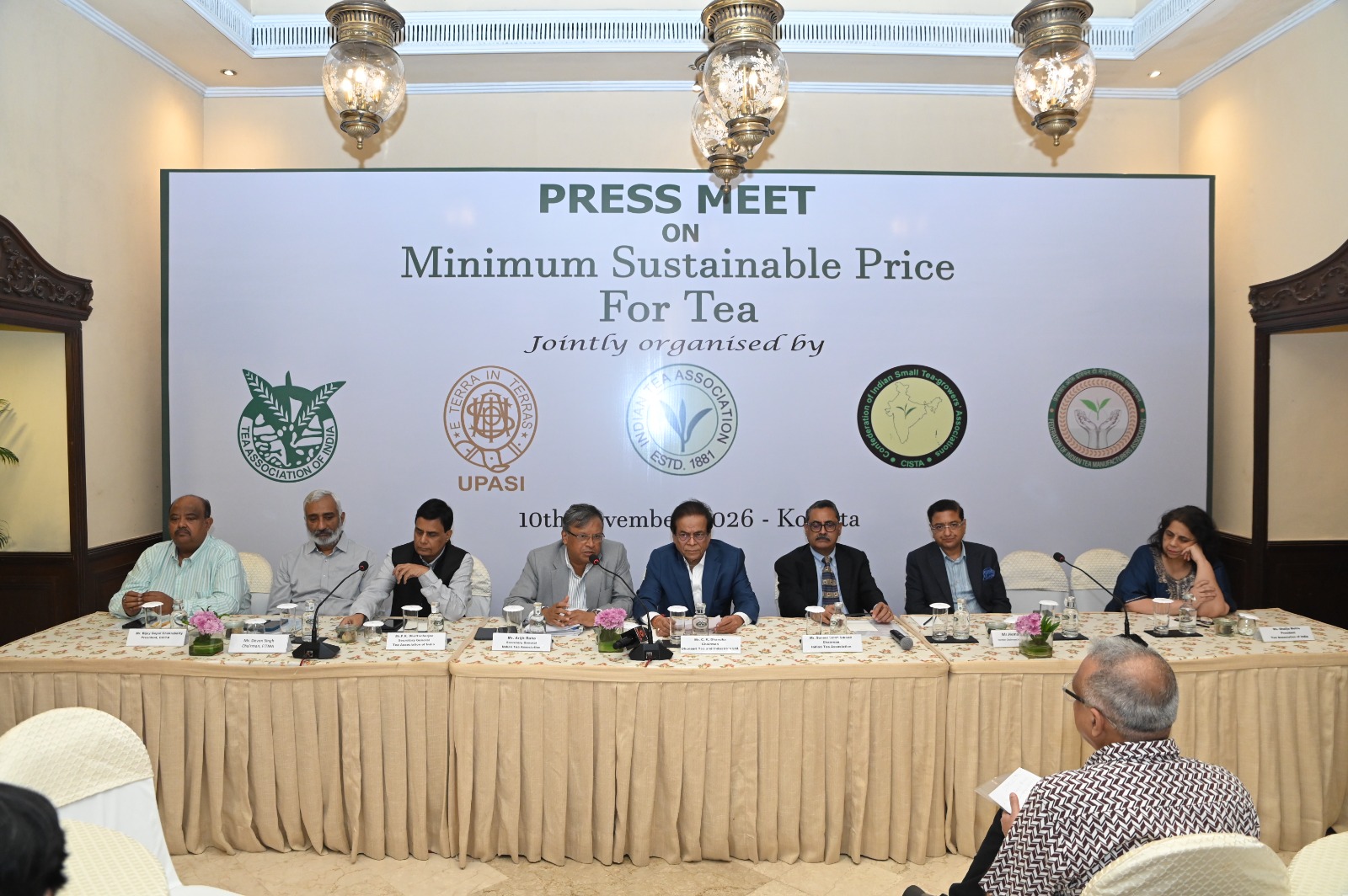
Mumbai / Kolkata, November 10, 2026: A 10-member committee constituted by the Tea Board of India has recommended the introduction of a Minimum Sustainable Price (MSP) for tea, marking an important step towards addressing the widening gap between production costs and market realisations in the Indian tea industry. Welcoming the recommendation, the Indian Tea Association (ITA), Tea Association of India (TAI), United Planters' Association of Southern India (UPASI), Confederation of Indian Small Tea Growers Associations (CISTA) and Federation of Indian Tea Manufacturers Association (FITMA) have emphasised the need for a sustainable pricing framework to secure remunerative returns for tea producers, protect the interests of small tea growers and ensure the long-term viability of the sector.
India, the world's second-largest tea producer, produces approximately 1,350–1,400 million kg of tea annually, with small tea growers contributing nearly 55% of the country's total production. However, the industry continues to face mounting financial pressures, with production costs increasing significantly faster than tea price realisations. Over the years, tea prices have registered a marginal compound annual growth rate (CAGR) of approximately 2–3%, as compared to an estimated CAGR of 10–14% in input costs. This growing disparity has affected producers' ability to sustain operations, invest in replantation, improve productivity and maintain quality standards.
The press conference brought together senior representatives of the five industry associations, representing diverse segments of the tea value chain, including organised tea estates, small tea growers and bought-leaf factories. The discussions highlighted the need for a pricing framework that recognises the varying economic realities of the sector while ensuring the sustainability of tea production across regions.
Mr. C.K. Dhanuka, Chairman, Dhunseri Tea and Industries, said, “The tea industry is confronted with mounting cost pressures, while tea price realisations have remained relatively stagnant. With further increases in wage costs anticipated pursuant to the implementation of the Code on Wages, the financial viability of tea producers is likely to face additional challenges. A Minimum Sustainable Price framework is therefore essential to bridge the widening gap between production costs and market realisations and to ensure the long-term sustainability of the industry. A Minimum Sustainable Price will help bring realisations in line with costs, so that the industry can protect accommodate wage revisions, protect employment and the competitiveness of Indian tea.”
The recommendation for an MSP assumes particular significance given the structural challenges confronting the industry. Employment costs account for approximately 60% of the total cost of tea production, making producers particularly vulnerable to wage increases. With the anticipated notification of floor wages by the Central and State Governments under the Code on Wages, tea producers are expected to face further increases in operating costs.
To address these concerns, the Committee has recommended a composite index reflecting wage movements and the Consumer Price Index (CPI) for determining the benchmark MSP. It has also proposed periodic reviews of the benchmark to ensure that the pricing framework remains aligned with changes in production costs and inflation.
Key Benefits of a Minimum Sustainable Price for the Tea Industry
The introduction of a Minimum Sustainable Price is expected to deliver wider benefits across the tea value chain; key expected benefits include:
Enabling the industry to better accommodate future increases in wages and salaries arising from anticipated notifications under the Code on Wages. This will be a win-win situation for the tea estate workers and small growers.
Improving the financial viability and sustainability of the tea industry, creating a stronger foundation for the sustained production of quality Indian tea.
Supporting better and more stable returns for small tea growers and registered tea gardens, strengthening their ability to maintain operations and adhere to quality benchmarks.
Encouraging improvements in the quality of green leaf and made tea, enhancing the global image of Indian tea and strengthening its export competitiveness.
Mr. Suneel Singh Sikand, Chairman, Indian Tea Association, said, “The recommendation for a Minimum Sustainable Price is an important policy intervention towards addressing the structural challenges confronting the Indian tea industry. Ensuring remunerative returns to producers is critical to sustaining operations, facilitating investment in replantation and productivity enhancement and securing the industry's long-term sustainability.”
Strengthening Regional Sustainability and Competitiveness
The proposed MSP framework also needs to account for the diverse economic realities of India's tea-growing regions. Differences in agro-climatic conditions, production practices, productivity levels and operating costs influence the economics of tea cultivation across regions. A responsive pricing mechanism that recognises these variations will be important in ensuring that producers across the country can sustain operations while maintaining the competitiveness of Indian tea.
Ms. Shailja Mehta, President, Tea Association of India, said, “The proposed Minimum Sustainable Price framework represents an important step towards strengthening the economic sustainability of the Indian tea industry. Improved financial viability will enable producers to maintain quality standards, invest in modernisation and productivity enhancement, and respond more effectively to evolving market requirements. This will be vital in reinforcing the global standing and competitiveness of Indian tea.”
The introduction of an MSP is expected to improve the financial viability of tea producers, enable better returns for small tea growers and registered tea gardens, and create greater scope for investments in cultivation, processing and quality enhancement. Improved financial sustainability will also support investments in modernisation, productivity enhancement and quality standards, strengthening India's position in the global tea market.
Mr. Sanjith R. Nair, Secretary General, United Planters' Association of Southern India (UPASI), said, “The proposed Minimum Sustainable Price framework is an important step towards addressing the diverse economic realities of India's tea-growing regions. Given the varying agro-climatic conditions, production practices and cost structures across regions, it is essential that the framework remains responsive to these differences while ensuring the overall sustainability and international competitiveness of Indian tea.”
Supporting Small Tea Growers and the Wider Industry
The proposed MSP framework assumes particular significance for small tea growers, who contribute approximately 55% of India's total tea production. While small growers depend on the prices received for freshly harvested green leaf, bought-leaf factories (BLFs) procure these leaves and process them into made tea for sale.
When the prices realised from the sale of made tea are insufficient to cover processing costs and support sustainable procurement prices, factories face pressure on the prices they can offer small growers. This has a cascading impact across the supply chain. A well-designed MSP mechanism could help address this imbalance by supporting sustainable green-leaf prices while recognising the distinct cost structures and economic circumstances of small growers, bought-leaf factories and organised tea estates.
Mr. Bijoy Gopal Chakraborty, President, Confederation of Indian Small Tea Growers Associations (CISTA), said, “Small tea growers constitute a significant segment of India's tea industry and contribute substantially to domestic tea production. Their economic viability is intrinsically linked to the prices realised for green leaf. A properly structured Minimum Sustainable Price mechanism would help ensure more remunerative and stable returns for small tea growers, thereby safeguarding their livelihoods and supporting the sustainable growth of this important segment.”
Bought-leaf factories form an important link in this ecosystem by providing market access to small tea growers and converting green leaf into made tea. Their financial sustainability is closely linked to the relationship between green-leaf procurement prices, processing costs and made-tea price realisations. Ensuring viable operations for these factories is therefore equally important to maintaining stability across the tea value chain.
Mr. Deven Singh, Chairman, Federation of Indian Tea Manufacturers Association (FITMA), said, “Bought Leaf Factories (BLFs) form a critical link in the tea value chain by providing market access to small tea growers and converting green leaf into made tea. Their sustainability is closely linked to the relationship between green leaf procurement prices, processing costs and made-tea price realisations. The proposed Minimum Sustainable Price framework must adequately recognise the operating economics of BLFs while ensuring viable returns across the value chain.”
The Committee's recommendations are expected to provide an important policy foundation for addressing the structural challenges facing tea producers and strengthening the economic sustainability of the sector.
The industry associations expect the Ministry of Commerce, Government of India, to take favourable note of the Committee's recommendations and notify the Minimum Sustainable Price for tea at the earliest.
A financially sustainable tea industry is essential not only for the continued production of quality Indian tea but also for safeguarding the livelihoods of millions of people dependent on the sector and strengthening India's position in the global tea market.
Company :-Dentsu
User :- Ankush Chavan
Email :-Ankush.Chavan@dentsu.com




To ensure stability and reachability of your applications at all times, remote DDoS protection can keep your hosting services online

Get your Explainer Video at 100 dollars only Today.