

Hot Press News
- Union Ministers Shri C. R. Paatil, Shri Tokhan Sahu and Shri V. Somanna call for nationwide participation in Swachhata Hi Seva 2026
- South Asian Tchoukball Federations Convene in New Delhi to Advance Regional Cooperation and Sporting Development
- North East Zone Inter-State Badminton Championship 2026 returns to Meghalaya after 10 years
- Mutineers Charter Services Announces Expanded Luxury Yacht Rental Options on Lake Lewisville
- Modern Wheat Breeding Offers New Pathways to Climate Resilience and Better Nutrition
- Organon Announces Two Her Health Grants in India to Support Adolescent Girls' Health in Bihar and Women's Contraceptive Access in Uttar Pradesh
- DiGGrowth Achieves ISO/IEC 42001 Certification and ISO/IEC 23894 Compliance
- AAFT Flag Presentation Ceremony Inspires New Spirit of Unity and Excellence at Marwah Studios
- Reign Beauty and Vitality Launches Comprehensive Body Skin Restoration Program Addressing Crepey Hands, Neck, and Chest Aging
- JEHEL Showcases Excellence in Hydraulic Material Handling Equipment at BAUMA CONEXPO INDIA 2026
- 100 Countries Connect with 19th Global Film Festival Noida 2026
- How GallantBounce Is Bringing Nike Grind™ to the Foundation of India’s Sports Fields
- ViceVersa Tools Releases New Utility for Converting MSG Email Files to PDF Documents
- iCallify Announces Advanced Inbound Call Center Software to Transform Customer Call Management
- The Happy Planner Introduces New Collections for 2027 Planning and Everyday Creativity
 Mail to a Friend Mail to a Friend |
|
 Rate Rate |
 |
Modern Wheat Breeding Offers New Pathways to Climate Resilience and Better Nutrition
2026-09-17 06:57:34
Education
140
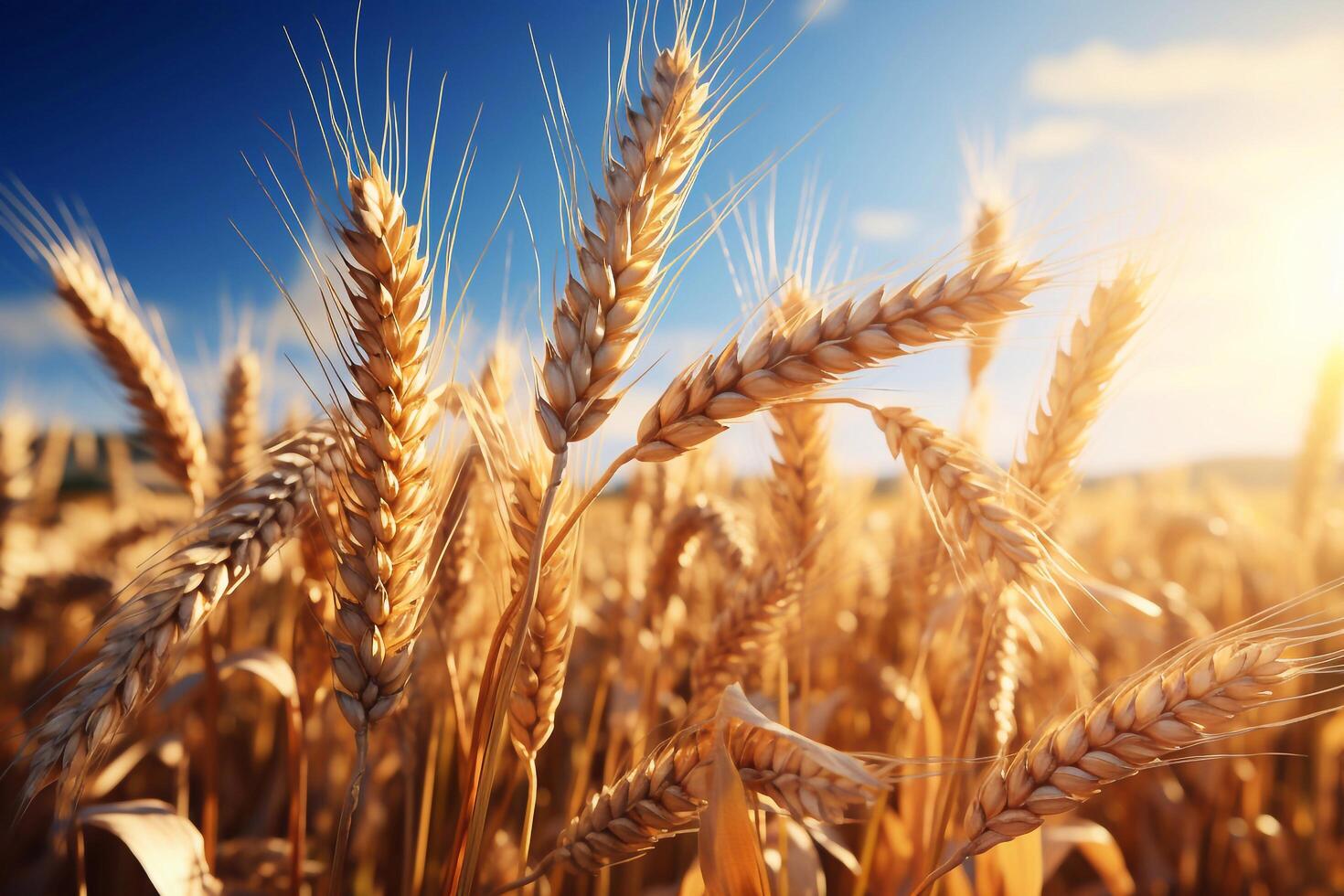
Prayagraj, Uttar Pradesh, India — The International Journal of Biochemistry Research & Review has published a review article titled “Wheat Genotype Improvement Evolution of Selection Strategies for Stress and Nutrition,” by Rajat Srivastav, Divya Singh and Tauheed Ali of the Faculty of Agriculture, Prof. Rajendra Singh (Rajju Bhaiya) University, Prayagraj. Published in Volume 35, Issue 4 (2026), the review examines how wheat breeding has evolved from conventional selection methods toward advanced genomic, molecular and biotechnological approaches designed to address climate stress and nutritional challenges.
Wheat Faces Growing Production and Nutrition Challenges
Wheat is a cornerstone of global food security, providing a major source of calories and protein for a large share of the world's population. However, its production is increasingly affected by drought, heat, salinity, waterlogging, nutrient deficiencies and other environmental stresses. These pressures can reduce yields and affect grain quality, creating challenges for farmers, food systems and populations that depend heavily on wheat as a staple food.
At the same time, nutritional deficiencies, particularly inadequate intake of essential micronutrients such as iron and zinc, remain a major concern. Because wheat is consumed widely, improving the nutritional composition of wheat grain through breeding and biofortification could contribute to broader efforts to improve nutritional security.
From Traditional Selection to Precision Breeding
The review traces the development of wheat improvement from traditional approaches such as phenotypic selection, pedigree breeding, backcrossing and mutation breeding. These methods played an important role in producing high-yielding and disease-resistant cultivars, particularly during the Green Revolution.
However, complex traits such as drought tolerance, heat tolerance, salinity tolerance, nutrient-use efficiency and micronutrient accumulation are controlled by multiple genes and are strongly influenced by environmental conditions. This makes them more difficult and time-consuming to improve using conventional selection alone.
The authors highlight a growing toolkit of modern approaches, including marker-assisted selection, quantitative trait locus (QTL) mapping, genome-wide association studies, genomic selection, high-throughput phenotyping and CRISPR/Cas-based genome editing. These technologies can help breeders identify desirable genetic traits more efficiently and accelerate the development of improved wheat genotypes.
Building Wheat for a Changing Climate
A central message of the review is that future wheat varieties need to combine productivity with resilience. Drought and heat can interfere with photosynthesis, grain development and nutrient uptake, while salinity can disrupt water absorption and nutrient balance. The review therefore emphasises breeding strategies capable of identifying wheat genotypes that maintain productive performance under stressful conditions.
Modern genomic tools can help locate genetic regions associated with stress tolerance and nutritional traits. For example, the review discusses QTLs and genes linked with drought, heat and salinity tolerance, as well as the Gpc-B1 genomic region associated with increased grain protein, iron and zinc content.
Combining Technology With Conventional Breeding
The review does not suggest that traditional breeding has become obsolete. Instead, it proposes an integrated approach combining conventional breeding with molecular tools, physiological screening, genomic technologies and precision phenotyping.
High-throughput phenotyping can allow breeders to evaluate large numbers of plants more rapidly, while genomic selection can use genome-wide information to predict the breeding potential of plants. Genome editing offers another route for targeted modification of genes associated with important agricultural traits.
Significance for Agriculture and Food Security
The implications extend beyond plant breeding laboratories. More resilient and nutritionally improved wheat varieties could support farmers facing increasingly variable growing conditions while contributing to stable food supplies and improved grain quality.
Nevertheless, the review stresses that important challenges remain. Genotype-by-environment interactions, limited genetic diversity, phenotyping constraints, infrastructure requirements, computational needs and regulatory considerations can all influence the effectiveness and adoption of advanced breeding technologies.
Looking Ahead
The authors conclude that future progress in wheat improvement will depend on effectively combining diverse germplasm, reliable phenotyping, validated molecular markers and evaluation across multiple environments. The ultimate goal is to develop wheat cultivars that can deliver stable productivity, greater resilience and improved nutritional value under changing climatic and agricultural conditions. The review also acknowledges that its conclusions are based on previously published research and that further experimental and field-based validation is needed.
References
Srivastav, R., Singh, D., & Ali, T. (2026). Wheat Genotype Improvement Evolution of Selection Strategies for Stress and Nutrition. International Journal of Biochemistry Research & Review, 35(4), 14–34. https://journalijbcrr.com/index.php/IJBCRR/article/view/1131
Sangha JS, Knox R, Duarte AG, Ruan Y, Cuthbert RD, Lokuruge P, Kumar S and Soolanayakanahally RY (2026) Integrating grain Δ13C/δ18O in selection of high-yielding bread wheat genotypes for water stress resilience in a semi-arid environment. Front. Sustain. Food Syst. 10:1840301. doi: 10.3389/fsufs.2026.1840301
Company :-International Journal of Biochemistry Research & Review
User :- IJBCRR
Email :-contact@journalijbcrr.com
Url :- https://journalijbcrr.com/index.php/IJBCRR/article/view/1131



Get your Explainer Video at 100 dollars only Today.



To ensure stability and reachability of your applications at all times, remote DDoS protection can keep your hosting services online